News Stories - Page 161

News from the College of Agricultural and Environmental Sciences

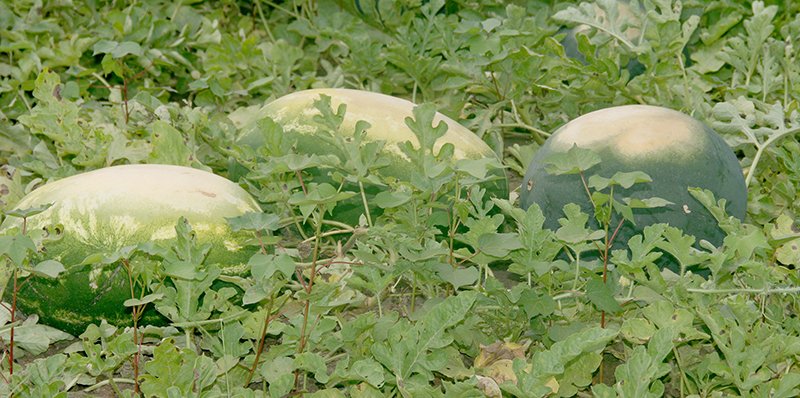
This 2015 photo shows sunburnt watermelons in a Tift County field. Watermelons can get sunburn if the vines aren't receiving enough water, which leads to wilting that makes fruit vulnerable to sun exposure. CAES News
Sunscalding
Even with the welcomed rain Georgia farmers experienced this week, sunscalding on certain fruits and vegetables remains a concern as producers continue with this year’s harvest, according to University of Georgia Cooperative Extension vegetable specialist Andre da Silva.
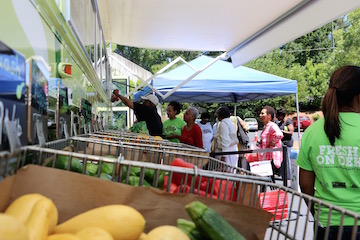
UGA Extension in DeKalb County and the DeKalb County Board of the Health use a revamped prisoner transport bus to provide fresh produce to its underserved communities. CAES News
Metro Markets
When the summer heats up in metro Atlanta, it’s time for the staff of metro Atlanta University of Georgia Cooperative Extension offices take to the streets, spreading the word about healthy eating and delivering access to fresh, healthy produce.
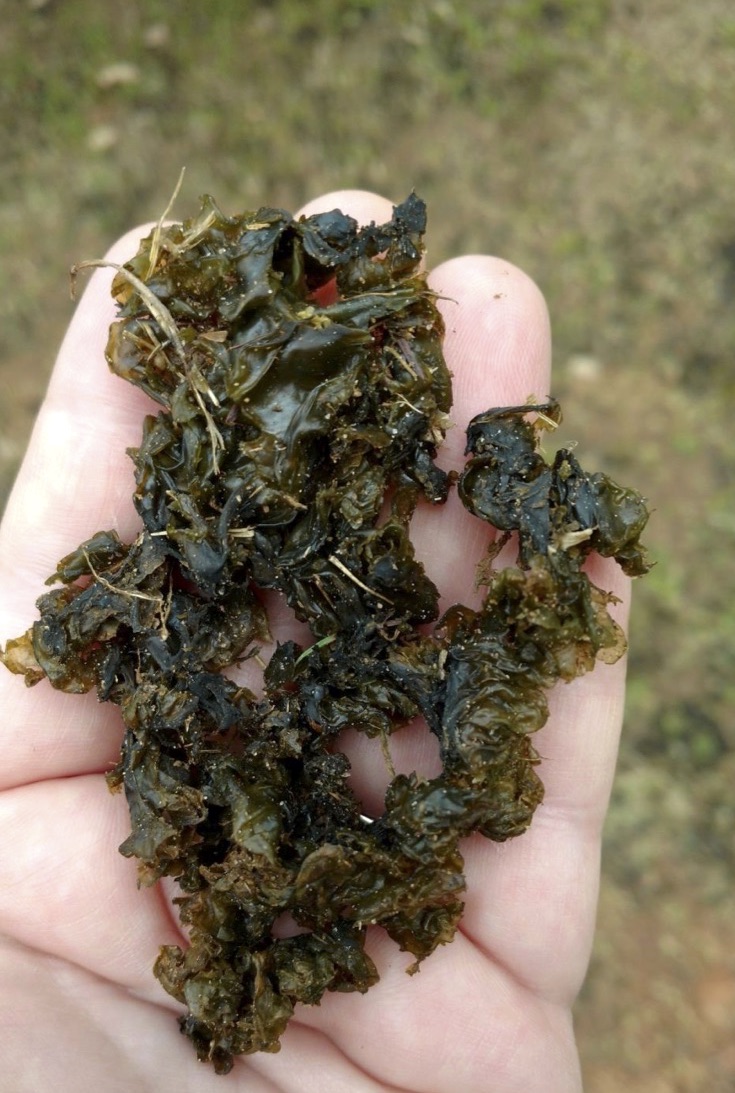
Nostoc is a jelly-like substance with multiple common names like star jelly and witch’s butter. In its hydrated, gelatinous, green state, it can be a safety hazard. Slippery when wet, Nostoc dries into a black crust that can prevent stolons from rooting, or “tacking,” into the soil, delaying the growth and spread of turfgrass. CAES News
Nostoc Algae
Recent dry weather encouraged the use, and possible overuse, of irrigation systems. Followed by tropical conditions characterized by heavy rainfall and humidity, there have been reports of a jelly-like substance growing in turf.
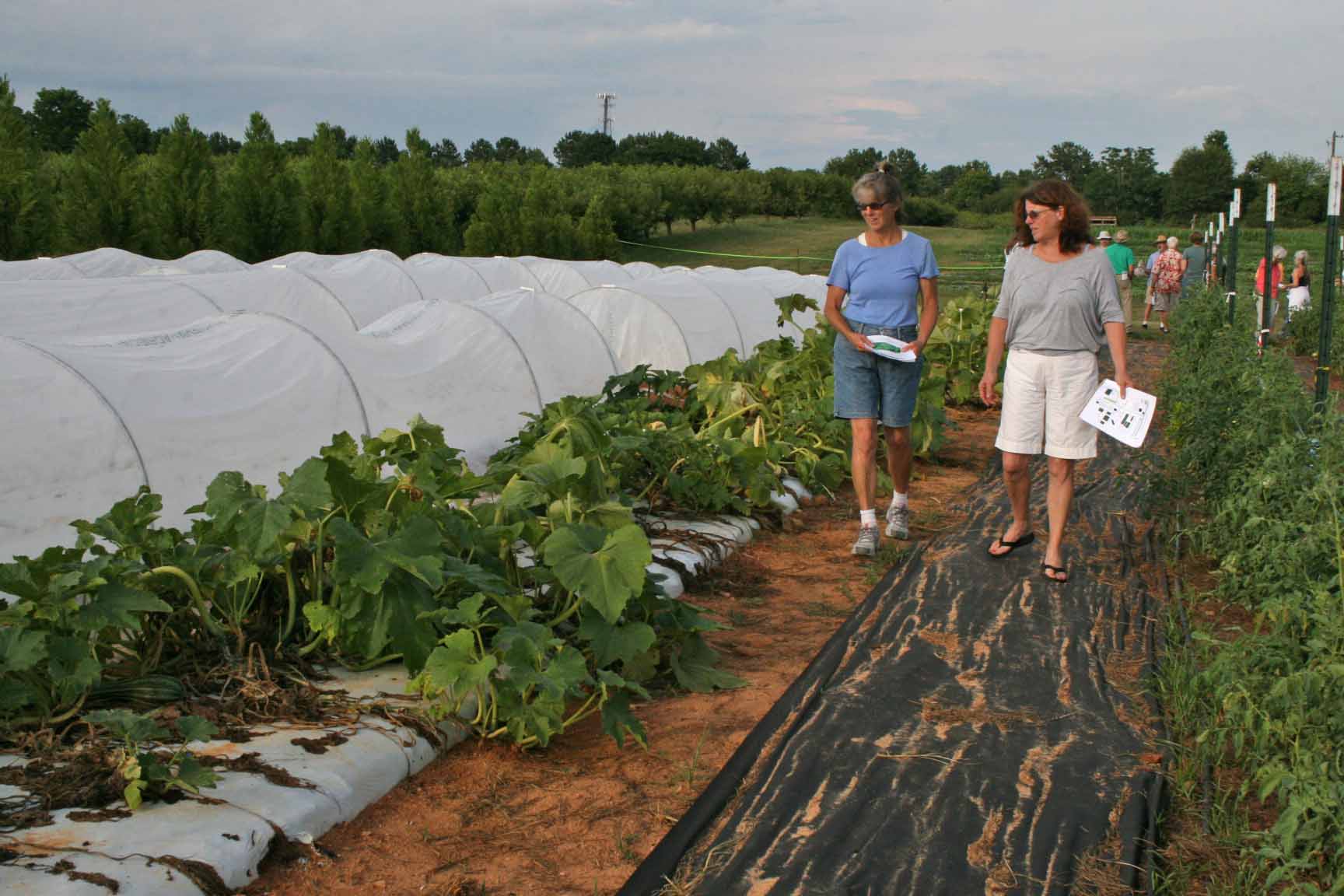
Two women tour the organic production plots at UGA's Durham Horticulture Farm during UGA's 2014 Organic Twilight Tour. CAES News
Farm Tours
The University of Georgia is a hub for research that will shape farms tomorrow, and northeast Georgians will get a sneak peek at the future of farming at two farm tour open houses this month.
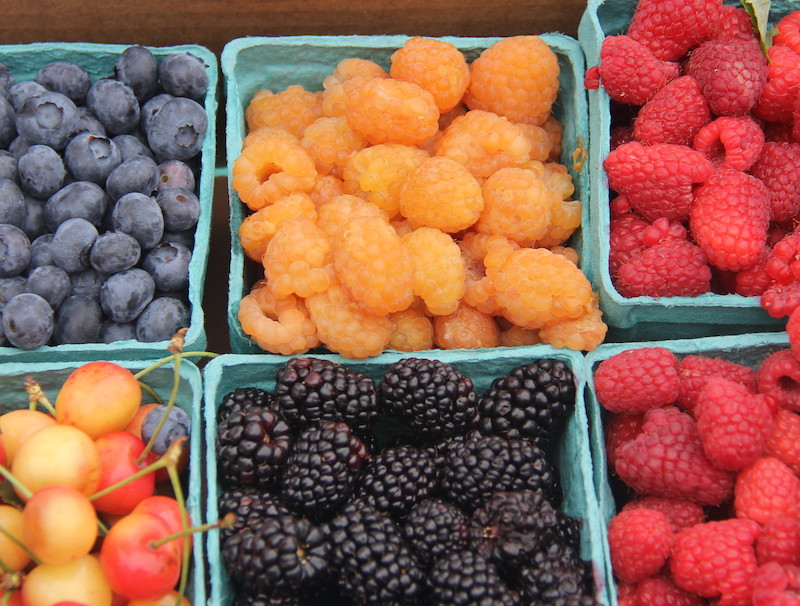
Three frozen blackberry, raspberry and blueberry products have been recalled from Kroger because of a potential hepatitis A health risk. Consumers are urged to check their freezers for the items. The hepatitis A virus can cause a mild illness lasting a few weeks to a serious illness lasting several months. CAES News
Hep A Threat
Kroger stores in Georgia and across the nation have recalled three frozen berry products because of a possible health risk of hepatitis A. University of Georgia Cooperative Extension urges consumers to take this recall seriously, as the virus can cause serious health issues.
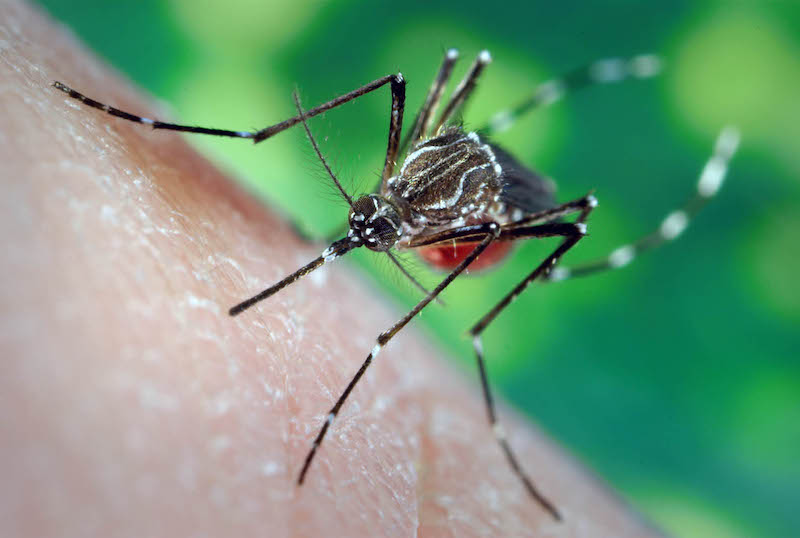
Abnormally dry conditions this summer have kept Georgia's mosquito populations mercifully low, but that's no reason for Georgians to let down their guard, especially this season. CAES News
'Skeeter' Season
Mosquito activity this spring has been nearly as erratic as Georgia’s weather. In the wake of the recent rainfall, homeowners should eliminate any standing water left behind, which makes perfect mosquito habitats.
Ronald Pegg is a professor in the UGA College of Agricultural and Environmental Sciences. He was named a 2019 Josiah Meigs Distinguished Teaching Professor and received the UGA Russell Award for Excellence in Undergraduate Teaching in 2013. CAES News
Pegg Honored
Whether food scientist Ronald Pegg is chasing coffee “from bean to cup” in Costa Rica or pinpointing the phenolic antioxidant constituents in Georgia pecans, he has a passion for inspiring an investigative spirit in his students. 
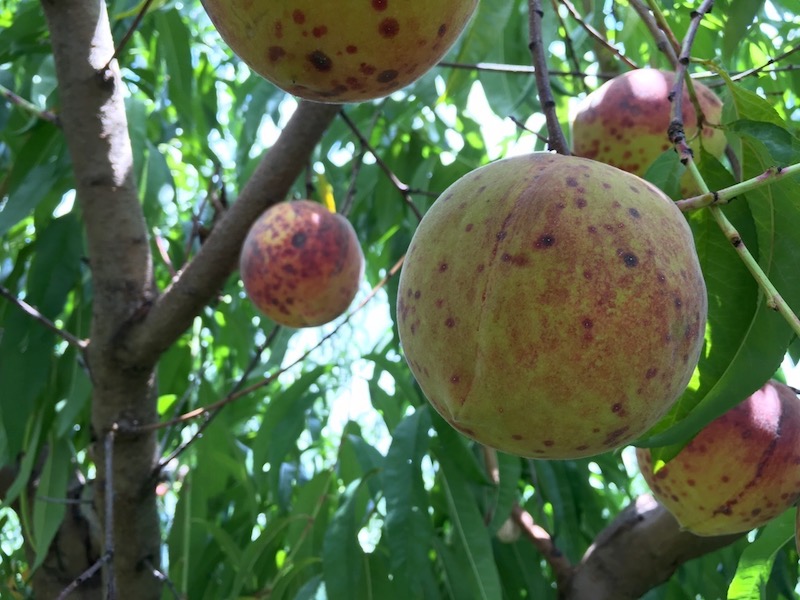
San Jose scale is a sucking insect pest which damages fruit, like this peach, and can eventually kill a tree by injecting toxins. CAES News
Peach Pest
Using horticultural oil sprays as an integrated pest management strategy to control San Jose scale in peach trees can be an effective alternative to chemical applications, and a University of Georgia study finds that the best control comes after trees have been pruned, allowing for lower application rates than previously recommended.
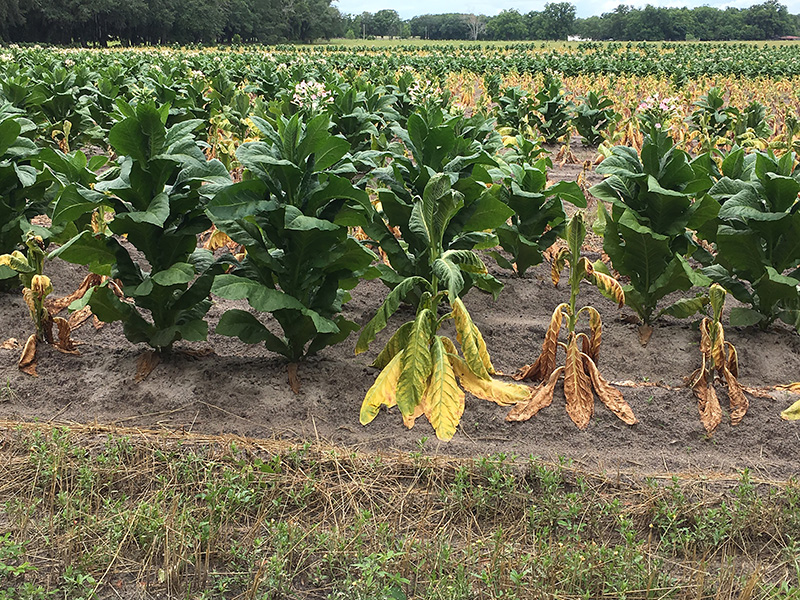
Black shank disease turns tobacco leaves yellow and causes the plant to wilt and eventually die. CAES News
Black Shank Disease
While most Georgia crops are suffering from the recent lack of rainfall across the state, tobacco farmers have some reason to celebrate. Three consecutive weeks of dry weather in May have curbed incidences of black shank disease, according to University of Georgia Cooperative Extension tobacco agronomist J. Michael Moore.
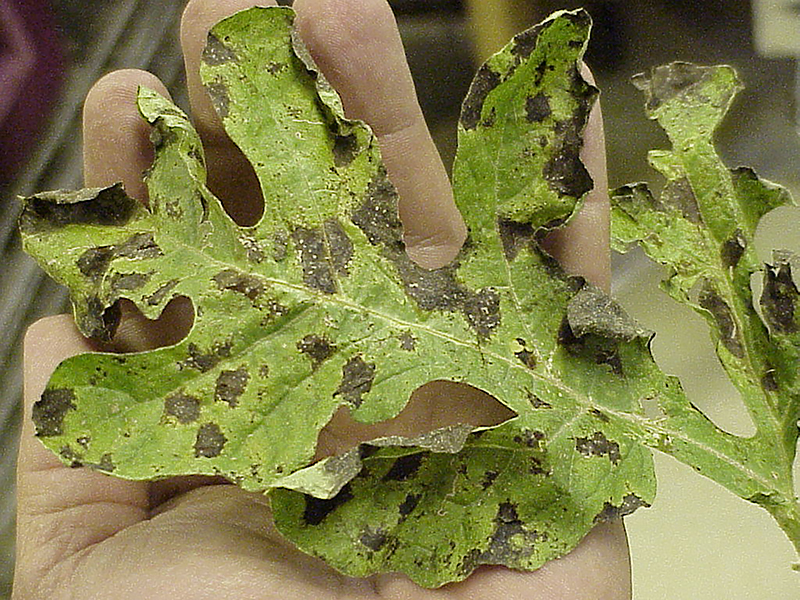
Pictured is what downy mildew disease looks like on a watermelon leaf. Downy mildew disease has been found in three southern Georgia counties so far this spring. CAES News
Downy Mildew
Georgia vegetable farmers should be on alert as downy mildew disease has been spotted in at least three southern Georgia counties this spring. Additional counties could follow as weather conditions remain favorable for the disease into early June, according to University of Georgia Cooperative Extension plant pathologist Bhabesh Dutta.